Product

SmartSIM

Simulation & Test Data-Driven Design Analysis Platform

SmartSIM maximizes the value of engineering data through seven core capabilities — from scenario generation and data transformation to sensitivity & reliability analysis, metamodel prediction, and automated reporting — unified in a single workflow.

01

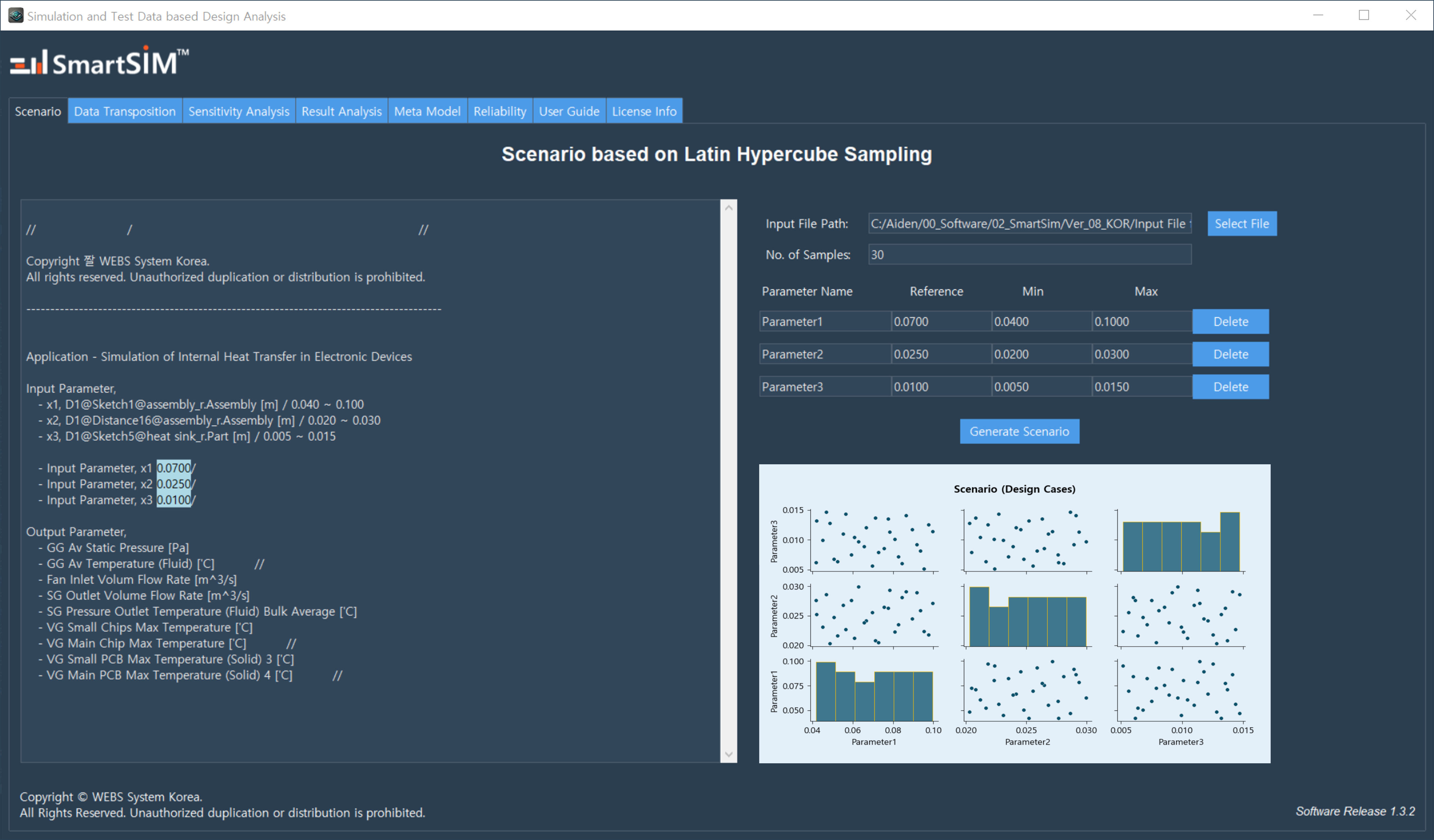
Automated Scenario Generation for Analysis and Testing

Scenario generation based on Maximin Latin Hypercube Sampling

  • Maximize minimum distance between sample points to evenly distribute samples across the design space
  • Efficient initial design point construction even in high-dimensional spaces
  • Explore diverse variable combinations effectively with fewer scenarios
  • Analyze interactions among input variables via Scatter Plot Matrix, Bar Plot, and Heatmap
  • Improved efficiency and accuracy of parameter studies
  • Better metamodel accuracy
  • Automated report generation
02

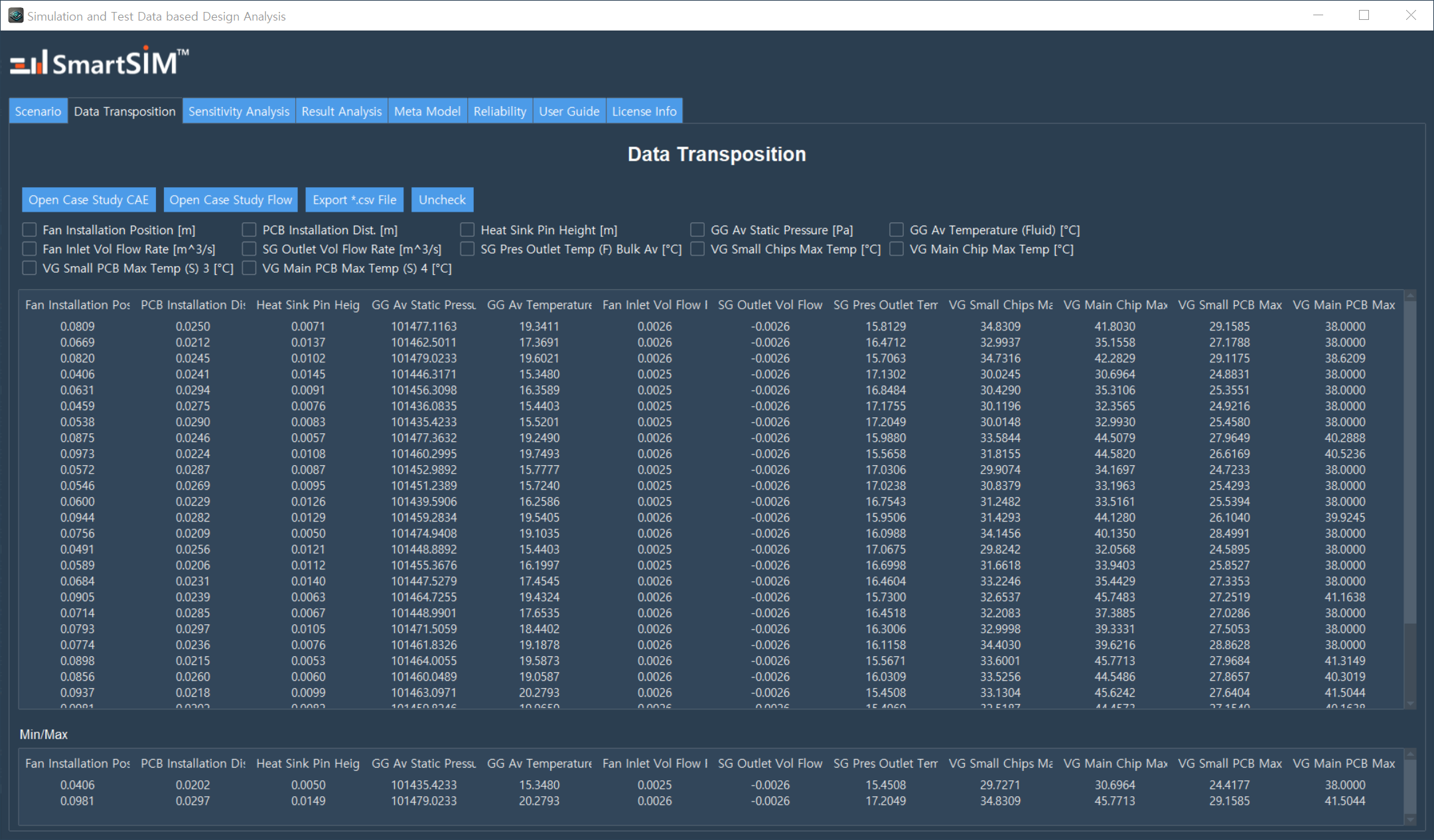
Automated Data Transformation

Auto-format simulation and test data for downstream analysis

  • Systematically auto-organize SolidWorks structural/flow simulation parameter study results
  • Clearly separate input/output parameters for improved readability
  • Provide min/max values of input and output parameters to support subsequent analysis
  • Improve the efficiency of downstream analyses (sensitivity analysis, metamodel generation, etc.)
  • Custom transformation features can be developed for various analysis and test data formats
03

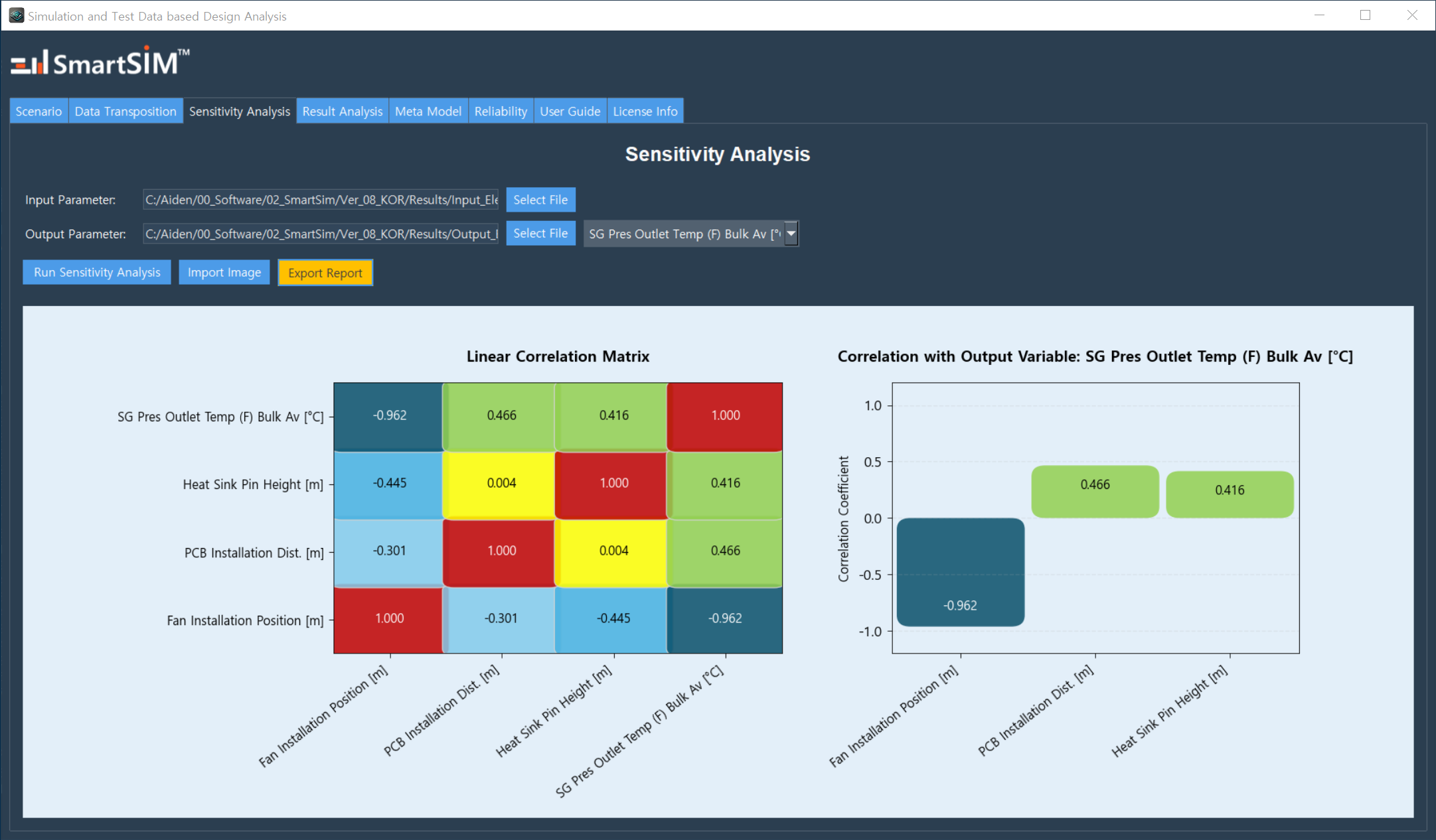
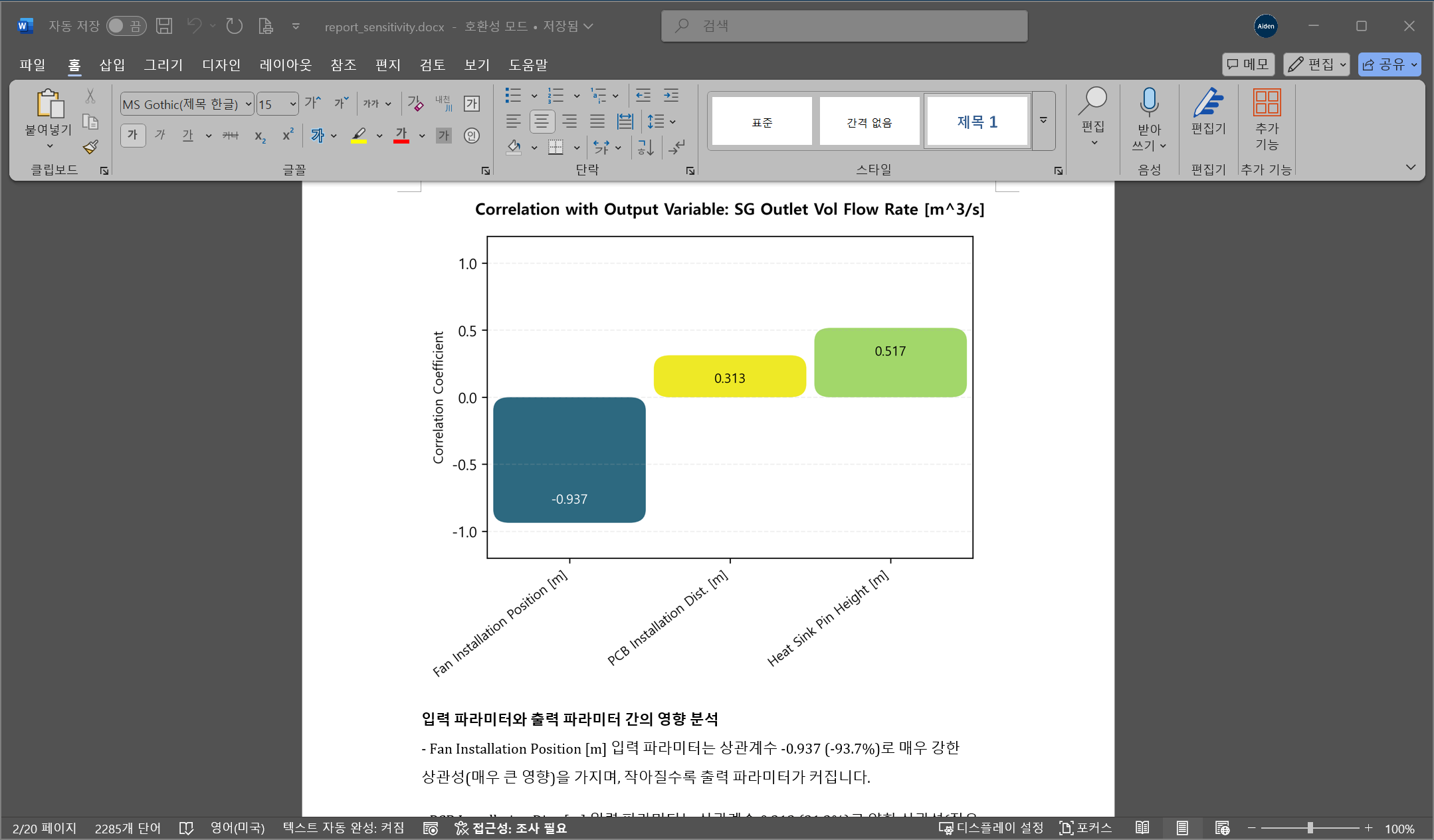
Correlation and Sensitivity Analysis of Input/Output Parameters

Quantitatively evaluate how design variables drive performance

  • Pearson correlation analysis between input/output parameters (heatmap visualization)
  • Sensitivity analysis of input parameters against output parameters
  • Precisely analyze complex interactions and quantify the impact of specific input variables on performance
  • Derive the priority of input variables for optimization, leading to accurate design insights
  • Support data-driven, reliable decision-making
  • Automatically generate detailed analysis reports → improved work efficiency
04

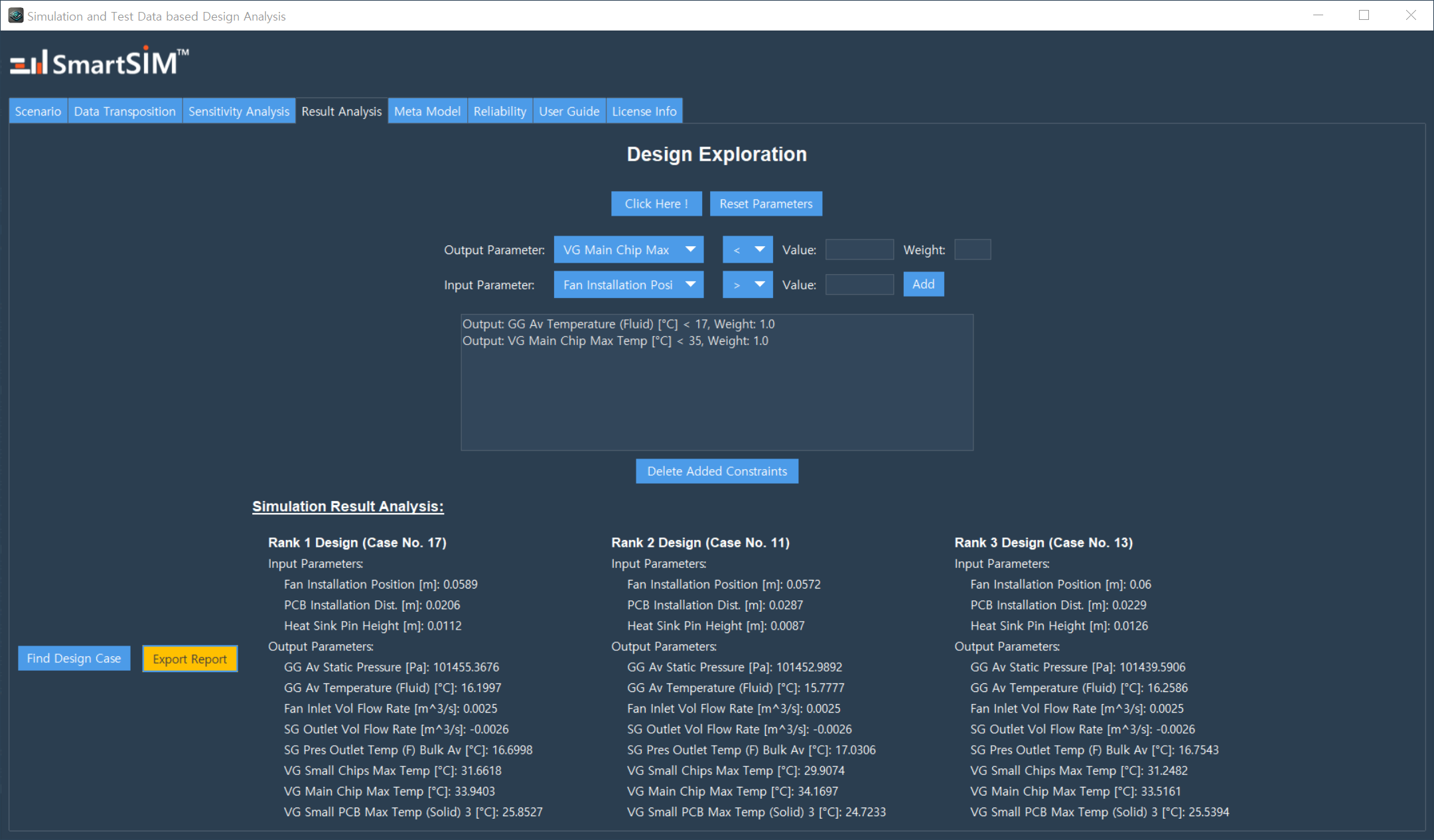
Constraint-Based Design Specification Analysis

Automatically derive optimal design candidates satisfying constraints and targets

  • Search for optimal combinations of design variables that meet user-defined constraints and target performance
  • Automatically derive design solutions that satisfy both functionality and performance
  • Efficiently review trade-offs between performance and cost
  • Improve design quality through decision support and structured analysis
  • Automated report generation (improves work efficiency)
05

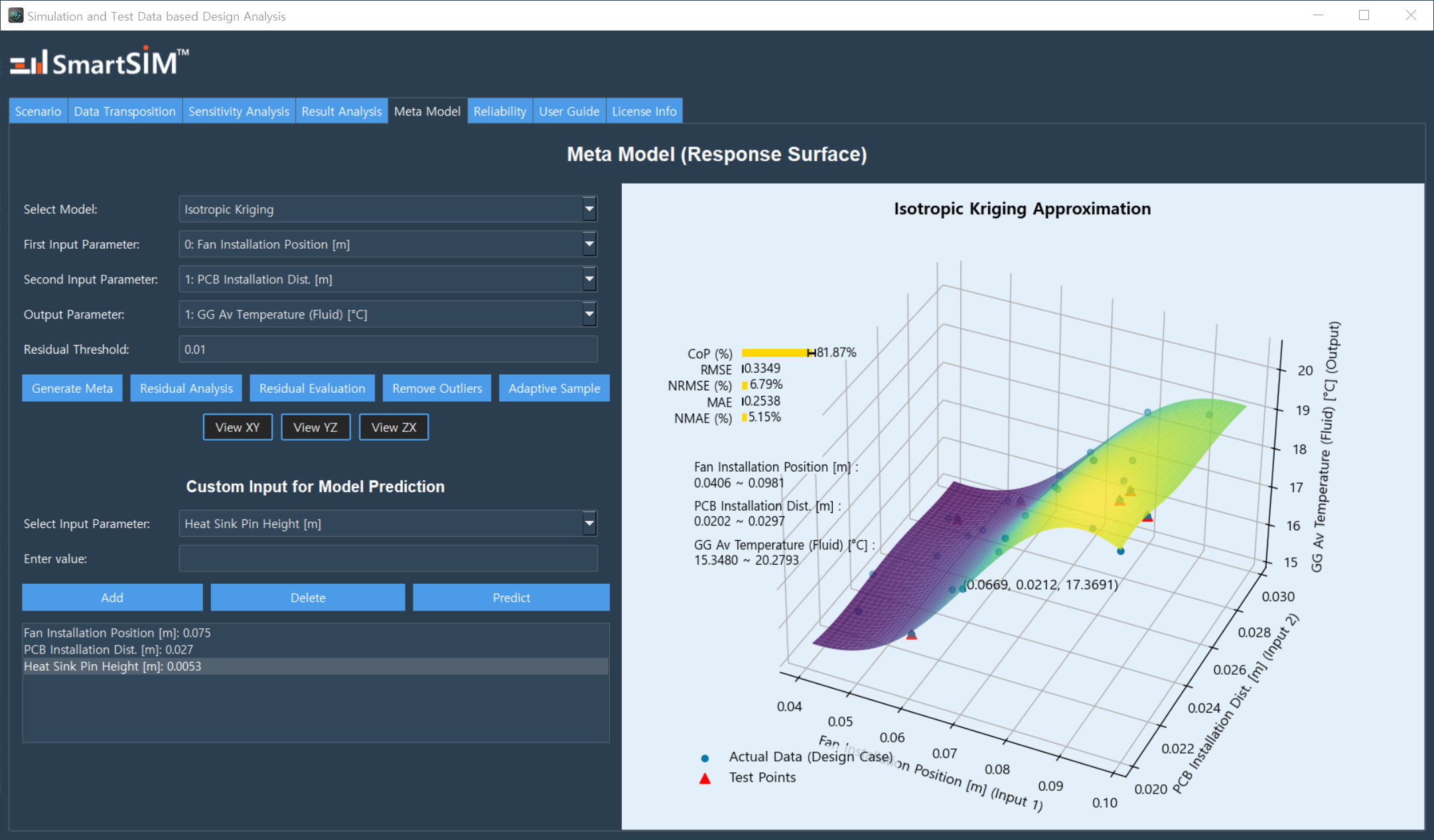
Metamodel Generation and Output Prediction

High-accuracy prediction models based on Kriging, MLS, and Polynomial Regression

  • Automatically generate metamodels from parameter study data
  • Supports Isotropic Kriging / MLS / Polynomial Regression metamodels
  • Accuracy and error metrics (CoP, RMSE, MAE)
  • Metamodel residual analysis (Histogram, Q-Q Plot of Residual)
  • Residual evaluation (Standard Deviation, Mean + 1.5 × Std, Q3 + 1.5 × IQR, etc.)
  • Improve metamodels by removing residuals
  • Predict output values as input parameters change
  • Adaptive Sampling auto-generated from metamodel analysis (improves accuracy)
06

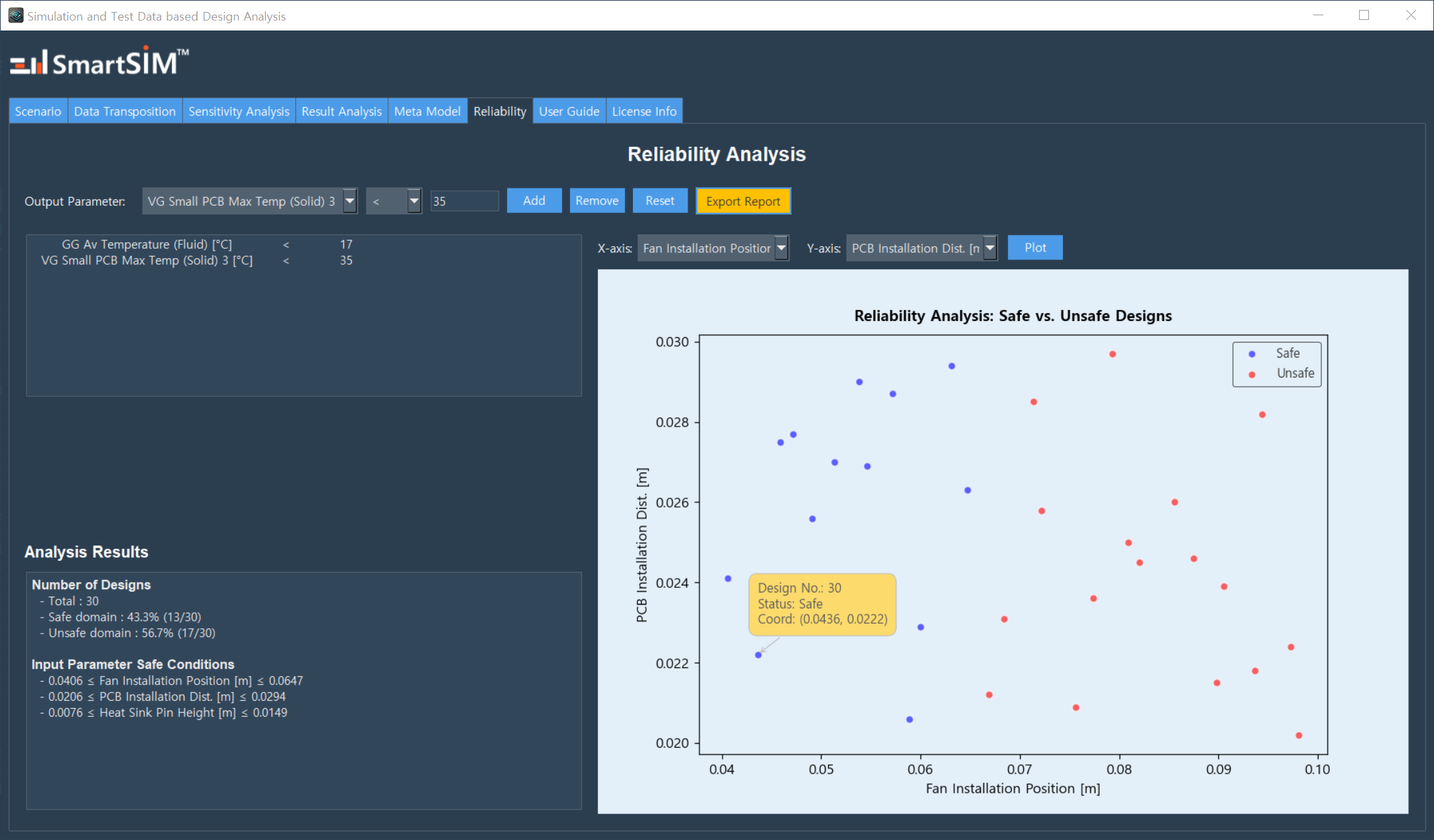
Constraint-Based Reliability Analysis

Automatically derive safe ranges of design variables for robust design direction

  • Statistical analysis of Safe/Unsafe scenarios based on constraints
  • Effective Safe/Unsafe scenario region analysis via visualization charts
  • Automatically derive the Safe Condition input variable range satisfying constraints → guides design direction
  • Analyze design variables that satisfy product performance (deriving optimization insights)
  • Automated report generation (improves work efficiency)
07

Automated Data Analysis Report Generation

Standardized analysis reports that accelerate collaboration and decisions

  • Automatically generate analysis reports in formats that are easy to understand and use
  • Intuitively organize key metrics, graphs, and analysis results for clear communication
  • Maintain consistent report formats to streamline document creation
  • Effectively support sharing of analysis results across research and design teams
  • Reduce time and cost spent on documentation, increasing work efficiency
  • Reliable analysis reports increase the persuasiveness and accuracy of decisions